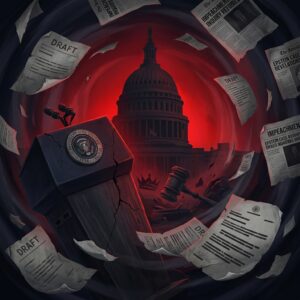
Over the last five days, the same pattern kept surfacing across Reddit and X: war escalation abroad, panic and spin at home, elite impunity everywhere, and a growing sense that the people in charge are not steering the machine so much as drunk-driving it while screaming at anyone who points out the smoke.
That’s the real story.
Not one headline. Not one outrage clip. A pattern.
And the pattern is rotten.
1) The Iran war stopped looking like strategy and started looking like regime stress
Across multiple scan windows, the dominant cluster was unmistakable: troop movements, tanker attacks, aircraft losses, casualty questions, oil disruption, and frantic attempts to control the narrative.
The details shifted by the hour, but the public mood stayed consistent:
- the war looks expensive,
- the messaging looks panicked,
- and the clowns selling it look like they don’t fully control it.
That’s why stories about military losses, rising troop wounds, Marines moving into the region, tanker disruptions, and burn rates on stockpiles kept climbing. People weren’t reacting like this was a confident show of force. They were reacting like this was another open-ended dumpster fire wrapped in flag graphics and cable-news testosterone.
And once people decide a war is being managed for optics rather than fought with a clear objective, everything starts to read differently.
A briefing blackout stops looking like discipline and starts looking like concealment.
A gas-price spike stops looking like bad luck and starts looking like a bill.
A tough-guy press conference stops sounding like leadership and starts sounding like a hostage video with better lighting.
That’s where this is now.
2) The administration’s answer to bad optics looks a lot like censorship
One of the clearest through-lines in the past five days was the collision between war messaging and media intimidation.
You saw it in the traction around stories about:
- the Pentagon restricting photographers at briefings,
- rhetoric about “hoaxes,”
- talk of punishing or threatening broadcasters,
- rage toward reporters asking obvious questions,
- and the broader instinct to treat scrutiny itself as sabotage.
That’s not confidence. That’s a regime telling on itself.
Governments that believe their case is strong usually want the facts out. Governments that know the facts are ugly start demanding better lighting, friendlier framing, and eventually obedience. The second the body count, fuel bill, and strategic incoherence start leaking through the wallpaper, the people in charge stop arguing and start snarling.
The deeper problem isn’t just anti-press rhetoric. It’s that the rhetoric lands because it fits the larger feeling of the moment: that the people in power increasingly believe accountability is optional and dissent is illegitimate.
When the war story gets shakier, the temptation is always the same: blame the messenger, shrink the camera angle, and dare the public to keep up.
3) “America First” keeps turning into war abroad and pain at home
The strongest engagement pattern across these files wasn’t abstract geopolitics. It was the domestic translation of foreign-policy chaos.
People are connecting the dots in plain English:
- war escalation,
- oil disruption,
- gas-price spikes,
- budget strain,
- unpaid or under-supported workers,
- and the same officials pretending none of this is their fault.
That’s why stories about rising gas prices, TSA workers laboring through funding chaos, stockpiles being burned down, and emergency energy moves got so much traction. The argument people are making isn’t complicated.
It’s this:
You told us strength would make life more stable. Instead, everything is more expensive, more chaotic, and more brittle.
That’s a killer frame because it hits the kitchen table.
Not everyone follows Strait of Hormuz shipping disruptions.
Everybody understands paying more.
Everybody understands being told to sacrifice while powerful people posture on television.
And once that frame hardens, the war stops being “over there.” It becomes another explanation for why life feels rigged here.
4) Elite impunity is the glue holding the whole backlash together
The war isn’t the only thing people are reacting to. It’s the sense that the same class of people keeps failing upward.
Over the last five days, that showed up in different forms:
- donor-access and “private briefing” energy,
- Kushner conflict-of-interest optics,
- DOGE/data-security anger,
- Palantir-style techno-authoritarian dread,
- Epstein-adjacent discourse resurfacing,
- and recurring resentment that rich, connected people never seem to pay the price for the systems they build or break.
This matters because outrage today isn’t siloed.
People don’t experience “war,” “corruption,” “media spin,” “tech abuse,” and “economic pain” as separate files in a spreadsheet. They experience them as one emotional thesis:
the wrong people hold power, protect each other, and expect everyone else to absorb the consequences.
That’s why billionaire-kids-and-the-draft rhetoric hit.
That’s why “premium national security access” style stories hit.
That’s why the combination of wartime sacrifice and elite insulation is politically radioactive.
The backlash isn’t just ideological. It’s moral.
5) The right is not unified — it’s being held together by momentum and enemies
Another underappreciated thread in the scans: the coalition around Trump does not look healthy.
You can see cracks everywhere:
- right-populist frustration over war,
- Tucker-style fracture signals,
- awkward SAVE Act battles,
- panic about the House majority,
- contradictions between nationalist branding and global military commitments,
- and the endless need to staple scandal, grievance, and fear together to keep the thing moving.
The outside image is strength.
The inside image is stress.
That doesn’t mean collapse is imminent. It means cohesion is more conditional than it looks.
A coalition can survive hypocrisy.
It can survive scandal.
It can survive incompetence.
What it struggles to survive is the moment its own supporters start feeling used.
And there are real signs of that mood creeping in.
6) The left’s opportunity is obvious — and so is its weakness
The other recurring theme in these files is that anti-Trump and anti-war energy exists, but the public still doesn’t fully trust the opposition to do anything coherent with it.
That’s why calls for primaries, complaints about fecklessness, fury at party leaders, and “why aren’t they fighting harder?” style posts kept surfacing.
There is an opening here, but openings are not victories.
If Democrats want to cash in on this moment, they need a sharper argument than:
- Trump is bad,
- the war is messy,
- and please trust us instead.
The effective argument is more brutal and more specific:
- they lied,
- they escalated,
- they hid the costs,
- they punished scrutiny,
- they protected insiders,
- and they handed you the bill like you should be grateful for the abuse.
That’s the winning frame.
Not moral theater. Not consultant poetry. Accountability.
7) So what’s the real headline from the last five days?
Here it is:
The public is starting to read this era as regime decay, not ordinary politics.
That’s why so many seemingly separate stories are sticking at once:
- war escalation,
- media threats,
- gas-price pain,
- donor privilege,
- elite grift,
- AI abuse,
- ICE cruelty,
- and a political culture that increasingly feels both more punitive and less competent.
Each story alone is survivable.
Together, they create atmosphere.
And atmosphere matters in politics.
Atmosphere is what makes the next scandal believable before it’s even confirmed.
Atmosphere is what turns a gaffe into a symbol.
Atmosphere is what makes people stop granting the benefit of the doubt.
That’s what’s changing.
Not just opinion.
Trust.
The bottom line
Over the last five days, the strongest signal across Reddit and X wasn’t just anger.
It was recognition.
Recognition that the sales pitch no longer matches the reality.
Recognition that “strength” is just panic with a logo.
Recognition that elite impunity is not a side issue — it’s the whole scam.
Recognition that war, censorship, corruption, and economic pain are not separate stories anymore.
They’re the same story.
And once enough people see that, the spin stops working the way it used to. That’s when the people in charge get sloppier, meaner, and more desperate — because underneath all the choreography, they know the con is getting harder to sell.