American politics is drifting into a new kind of normal, and the most dangerous thing about it is how familiar it already feels.
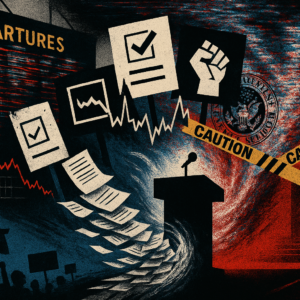
Every day brings a different headline, but the underlying script barely changes. One day it is a new push to centralize voter rolls or restrict mail-in ballots. The next day it is another wartime escalation sold as strategic necessity, even as costs spread through gas prices, troop deployments, supply chains, and domestic austerity. In the same breath, we are told to accept more executive improvisation, more emergency powers, more institutional stress, and less time to ask basic democratic questions.
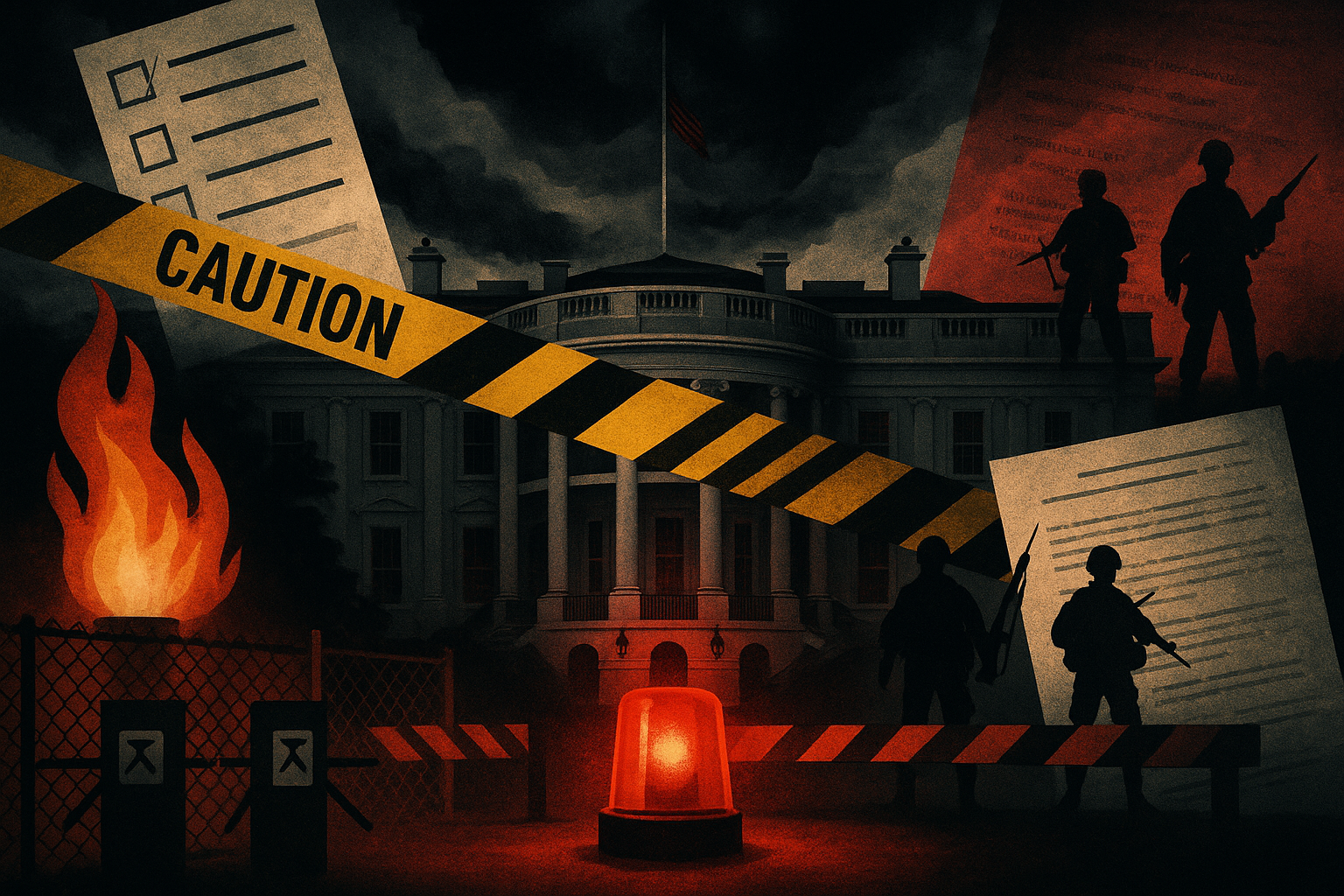
This is not just chaos. It is the politics of permanent emergency.
That phrase matters because emergency politics does something ordinary authoritarian rhetoric cannot do on its own: it convinces people that process itself is a luxury. If the nation is always under threat, if the war is always one step from widening, if the election system is always supposedly on the brink of fraud, if the border is always treated as a five-alarm crisis, then normal constitutional limits begin to sound quaint. Debate becomes delay. Oversight becomes weakness. Restraint becomes betrayal.
Look at how the trend lines now reinforce one another.
On voting, the pressure campaign is no longer subtle. We are seeing renewed pushes to restrict mail-in voting, create a national voter list, and test how much election administration can be bent by executive will before courts or states push back. Oregon was among the first to sue over the mail-voting order, a reminder that these fights are not theoretical—they are already underway.
On immigration, the same emergency logic is doing even more visible work. The idea of giant detention and holding infrastructure is being normalized through stories about proposed ICE “mega centers” and headline after headline about crackdowns, custody deaths, and increasingly punitive enforcement. When a refugee death after Border Patrol custody is ruled a homicide, the point is not just that the system is cruel. It is that the emergency frame has made cruelty easier to market as necessity.
Then there is the war machine, where permanent emergency becomes both literal and lucrative. The Iran conflict has produced a steady stream of stories about troop buildups in the Middle East, ground-operation planning, and a widening regional crisis that is already feeding oil spikes and broader economic anxiety. At the same time, questions around profiteering and political self-dealing keep surfacing, including reporting that Defense Secretary Pete Hegseth’s broker looked to buy a defense fund before the Iran attack. That is the perfect emblem of emergency politics: ask the public for sacrifice, then let insiders treat the crisis as a trade.
And when the bill comes due, it is not the people calling for escalation who pay first. The same ecosystem that sells war as leadership also floats domestic cuts as realism. It is hard to miss the moral inversion in reports that the White House was open to kicking hundreds of thousands off health care to fund war. That is not national strength. That is a ruling class asking ordinary people to subsidize geopolitical theater while being told not to complain about the price.
The genius of permanent emergency is that it turns every sphere of public life into justification for more centralization. Courts become enemies when they block vanity or overreach, which is why rulings against moves like the effort to strip funding from NPR and PBS are cast not as constitutional guardrails, but as partisan sabotage. The same frame applies to election law, immigration enforcement, foreign policy, and even information itself. Independent institutions are tolerated only when they ratify executive appetite.
That is also why the backlash matters. The scale of the No Kings protests was important not just as spectacle, but as a civic rebuttal. The message was not only anti-Trump. It was anti-monarchical politics. Anti-permanent exception. Anti-theory that the country must live in a state of endless tension so that one man or one faction can keep claiming extraordinary permission.
Even some of the most resonant voices breaking through lately have been the ones challenging the moral assumptions of emergency politics itself. Pope Leo’s warning that God does not listen to the prayers of those who wage war landed because it cut through all the strategic jargon and forced the argument back to first principles. Not everything justified in the language of security is righteous. Not everything done in the name of order is legitimate.
That is the real fight taking shape now.
Not simply left versus right, or one administration versus another, but emergency government versus democratic government. One model says public fear should be cultivated, because fearful people surrender power more readily. The other says the test of a free society is whether it can face genuine danger without letting every danger become a blank check.
A politics of permanent emergency does not stay confined to one issue. It spills. A war abroad becomes an excuse for price shocks and secrecy. A border crisis becomes an excuse for a harsher domestic security culture. Election paranoia becomes an excuse for centralizing control over the mechanics of democracy. Information warfare becomes an excuse to punish independent media. In every domain, the lesson is the same: stop asking questions, trust the strong hand, and accept that the rules are suspended because the moment is too urgent.
That is how a republic gets hollowed out without always looking like it is collapsing.
Not through one grand rupture, but through repeated insistence that this exception is necessary, that this overreach is temporary, that this concentration of power is just what the crisis demands. Then another crisis arrives. Then another. Soon the emergency is not a condition. It is the regime.
The task now is to refuse that conversion.
The United States does not need a permanent wartime presidency, a permanent border-state mentality, or a permanent theory that elections only count when the right people control the machinery. It needs a public willing to recognize the pattern before the pattern becomes constitutional habit.
Because once emergency becomes the atmosphere, freedom is always the thing we are told can wait until later.